Digital Storytelling as the New Avant Garde: Heritage, Memory and Inclusivity – Vishnupriya Saxena
Digital Storytelling as the New Avant Garde: Heritage, Memory and Inclusivity – Vishnupriya Saxena
Digital Storytelling as the New Avant Garde: Heritage, Memory and Inclusivity – Vishnupriya Saxena
Alzheimer’s through Thanmathra
In an age where narratives no longer remain confined to printed pages or oral traditions but circulate fluidly through digital interfaces, the act of storytelling has undergone a paradigmatic transformation. The digital medium has not only expanded the means of narration but has also revolutionized the function and form of cultural memory. This paper explores digital storytelling as an avant-garde form, not merely because of its technological novelty, but because of its potential to dismantle aesthetic orthodoxy, foreground cultural inclusivity, and revive the heterogeneous textures of memory.
This essay examines the interplay of memory, identity, and family as portrayed in the film Thanmathra (2005). Serving as the primary text, Thanmathra provides a cinematic exploration of the effects of Alzheimer’s disease, particularly highlighting how memory loss disrupts personal identity and familial bonds. Thanmathra (English: Molecule) is a 2005 Indian Malayalam-language drama film written and directed by Blessy and starring Mohanlal, Meera Vasudevan and Arjun Lal. Based on Padmarajan’s short story “Orma”, it portrays the effects of Alzheimer’s disease on the life of Ramesan Nair (Mohanlal) and his family.
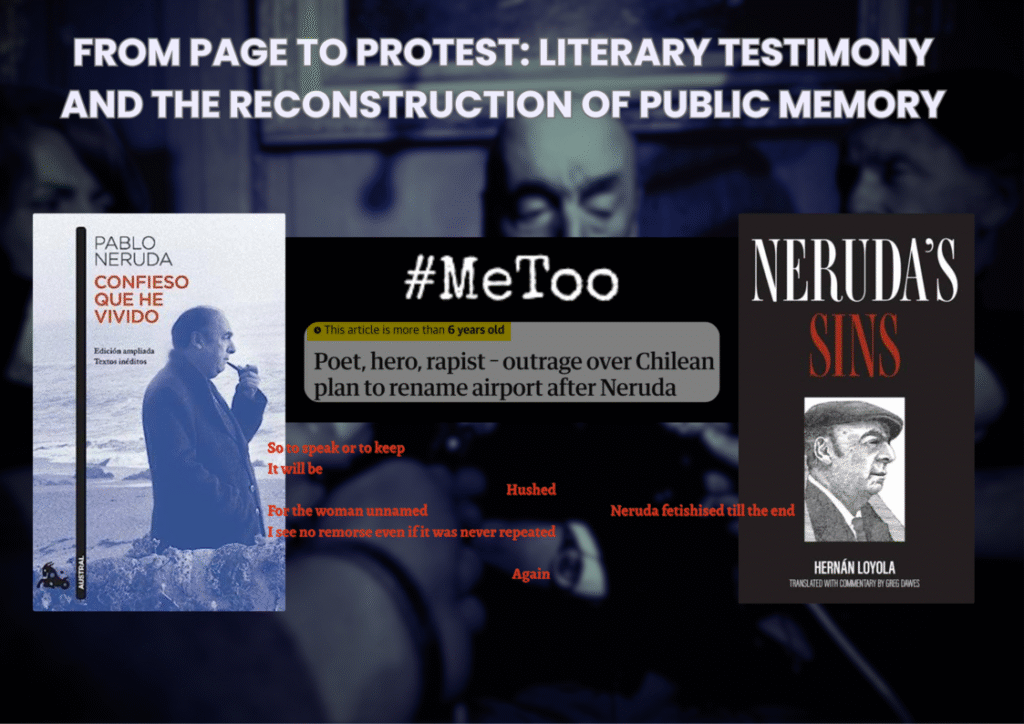
From Page to Protest: Literary Testimony and the Reconstruction of Public Memory
Hernán Loyola’s Neruda’s Sins attempts a sympathetic reckoning of the poet’s personal failings — his betrayals as a husband, his inadequacies as a father, casually inserting the word rapist into a list of moral lapses, as if all were sins of comparable weight. But what Neruda confessed to in Ceylon (present day Sri Lanka), where he served as a consul, was not a personal failing, but a violent crime. In ‘Confieso Que He Vivido’ his memoir’s fourth chapter ‘Luminous Solitude’, he describes, without any apparent remorse, the assault of a Tamil woman of the Paraiyar caste. A chilling account steeped in objectification, yet again stripping her of both voice and agency, as he indulges in a crude, lustful description.
Tell me and I forget. Teach me and I remember. Involve me and I learn.” – Benjamin Franklin Introduction Playing has been around since the time humans have existed. It is through games and storytelling we make sense of the world around us. From phenomenological perspective, the act of playing goes beyond recreation. The player …
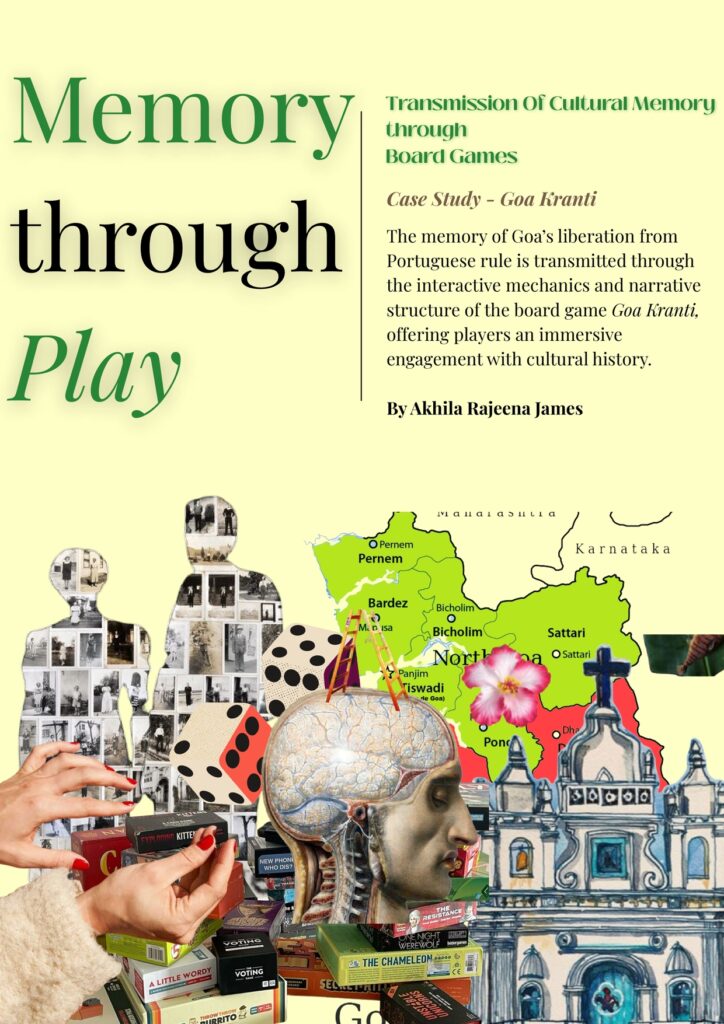
Memory Through Play: Transmission of Cultural Memory through Board Games
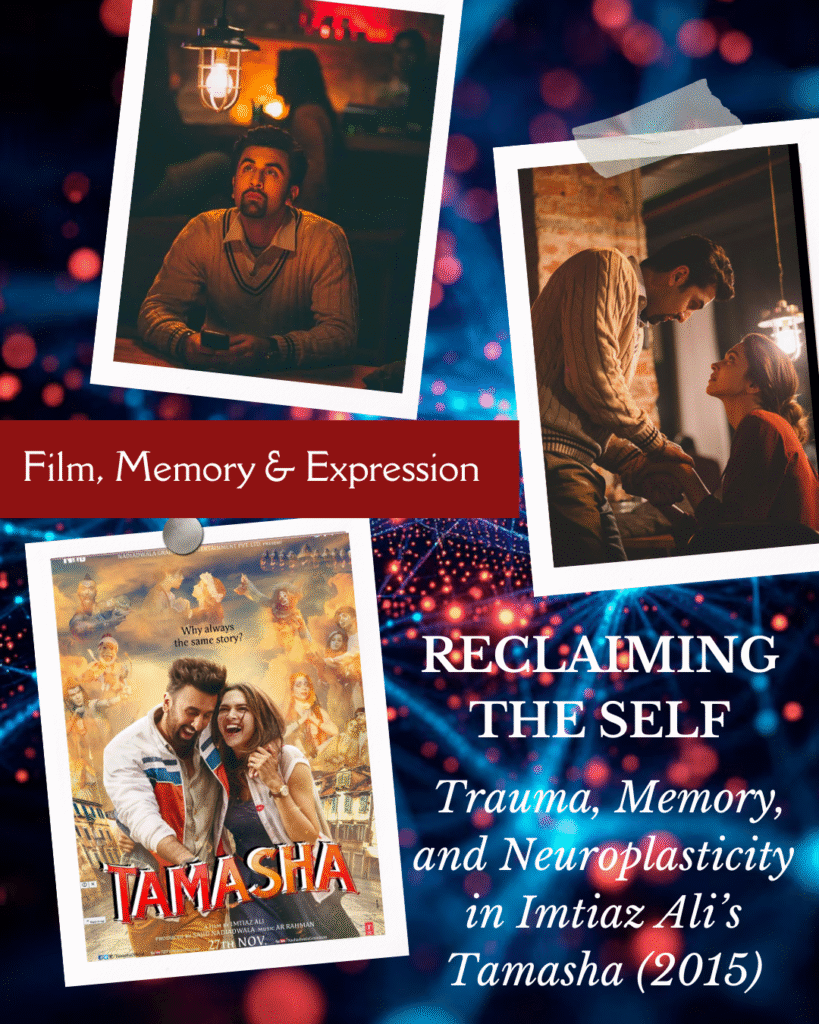
This paper scrutinizes Tamasha (2015), a Bollywood film by Imtiaz Ali, as a cinematic narrative that delves into psychological trauma, memory suppression, and maps the journey of reclaiming one’s true identity. The film follows the protagonist Ved, whose identity is shaped by childhood conditioning and societal pressure, leading to emotional dissociation and identity confusion. Fundamentally grounded on the theoretical understanding of Cathy Caruth, Judith Herman, Bessel van der Kolk, Norman Doidge, and Laura Marks, the study examines how Ved’s emotional vulnerability and eventual healing reflect the principles of “belated” trauma, memory recovery, and neuroplastic transformation. The study, through close analysis of the film’s narrative structure, visual triggers, and symbolic motifs, emphasizes how Tamasha reflects not only the burden of repression but also the healing capacity of storytelling and self-expression. The study aims to make a meaningful contribution to Indian cinema’s association with mental health and the discourse of trauma recovery.
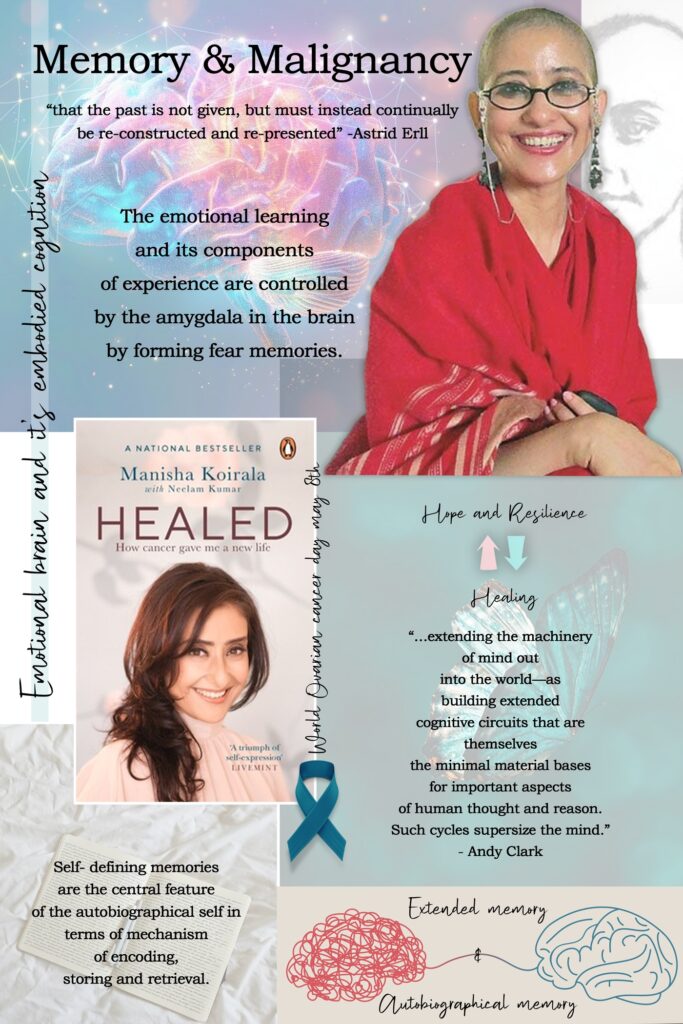
Abstract Cancer narratives, or pathographies, hold significant value in the field of health humanities. As memoirs, these personal narratives occupy a central place in memory studies, offering insight into how individuals remember, interpret, and give meaning to lived experiences. Moreover, memoirs can serve as tools of resistance, healing, or testimony, especially in contexts of trauma, …
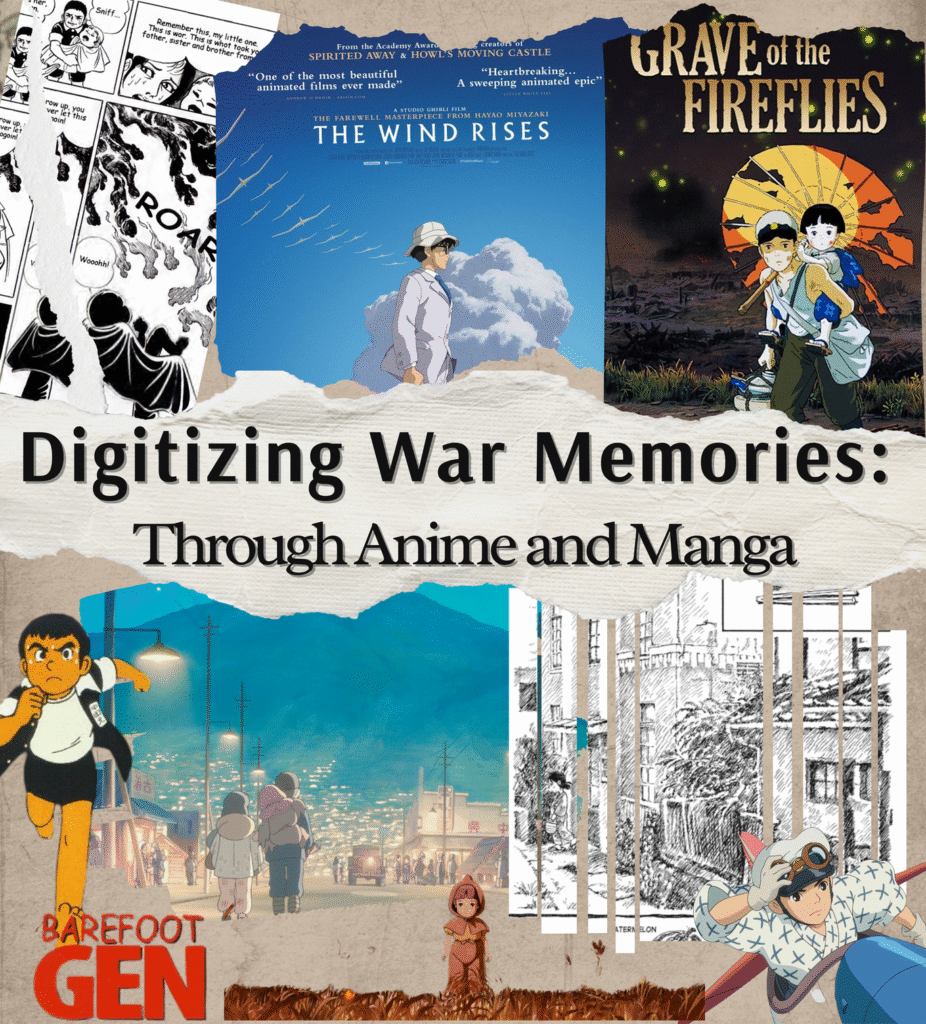
Digitizing War Memories: Through Anime and Manga
World War II left an indelible mark on Japan’s collective consciousness. In the early postwar years, memories of defeat and devastation were often kept private or repressed, as Japan grappled with being both a victim of atomic attacks and the perpetrator of imperial war. This created ‘a gap’ in the tradition of familial storytelling, and social stigma around retelling painful experiences. Over time, new media forms became crucial platforms to fill that gap. Specifically, Japanese anime and manga began to ‘speak for history’ in place of ordinary witnesses. Anime works like Barefoot Gen (Manga -1973; Anime -1983) and Grave of the Fireflies (short story – 1967; Anime -1988) transform personal trauma into collective memory through powerful visual narratives. Anime also blends history with myth, as Susan J. Napier notes, animation allows “history and memory [to] transform into myth and even into fantasy,” offering viewers a way to “work through” historical trauma (Napier 2005, 1). Yet this very mediation of memory raises tensions, as critic Lisa Yoneyama warns (cited by Napier), “memory has often been associated with myth or fiction” and must be carefully handled because any portrayal of the past is “always enmeshed in the exercise of power” (Napier 2005, 1). Thus, postwar anime/manga serve as digitized war archives that preserve the past in narrative form while inviting scrutiny of their authenticity.
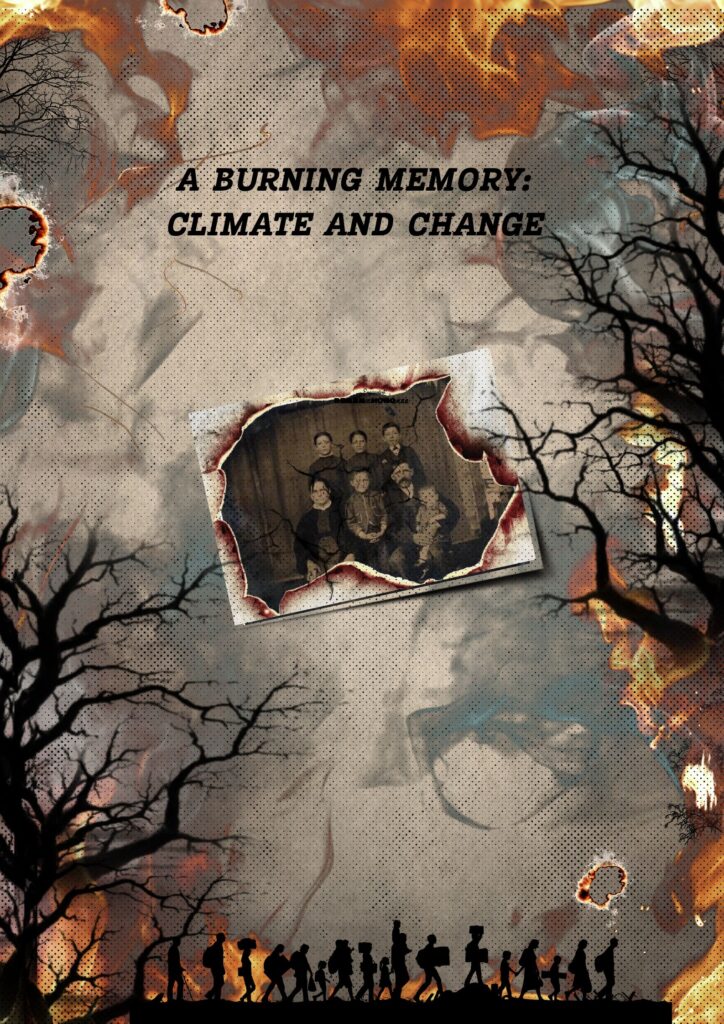
The world is growing to be more knowledgeable on climate change, as the changes that have been brought upon are irreversible. The realisation sets forth a quest for a future that seems to be shrinking. Nothing related to climate change is pleasant, eventually raising fear and anxiety in the livelihood. The world is trying its …
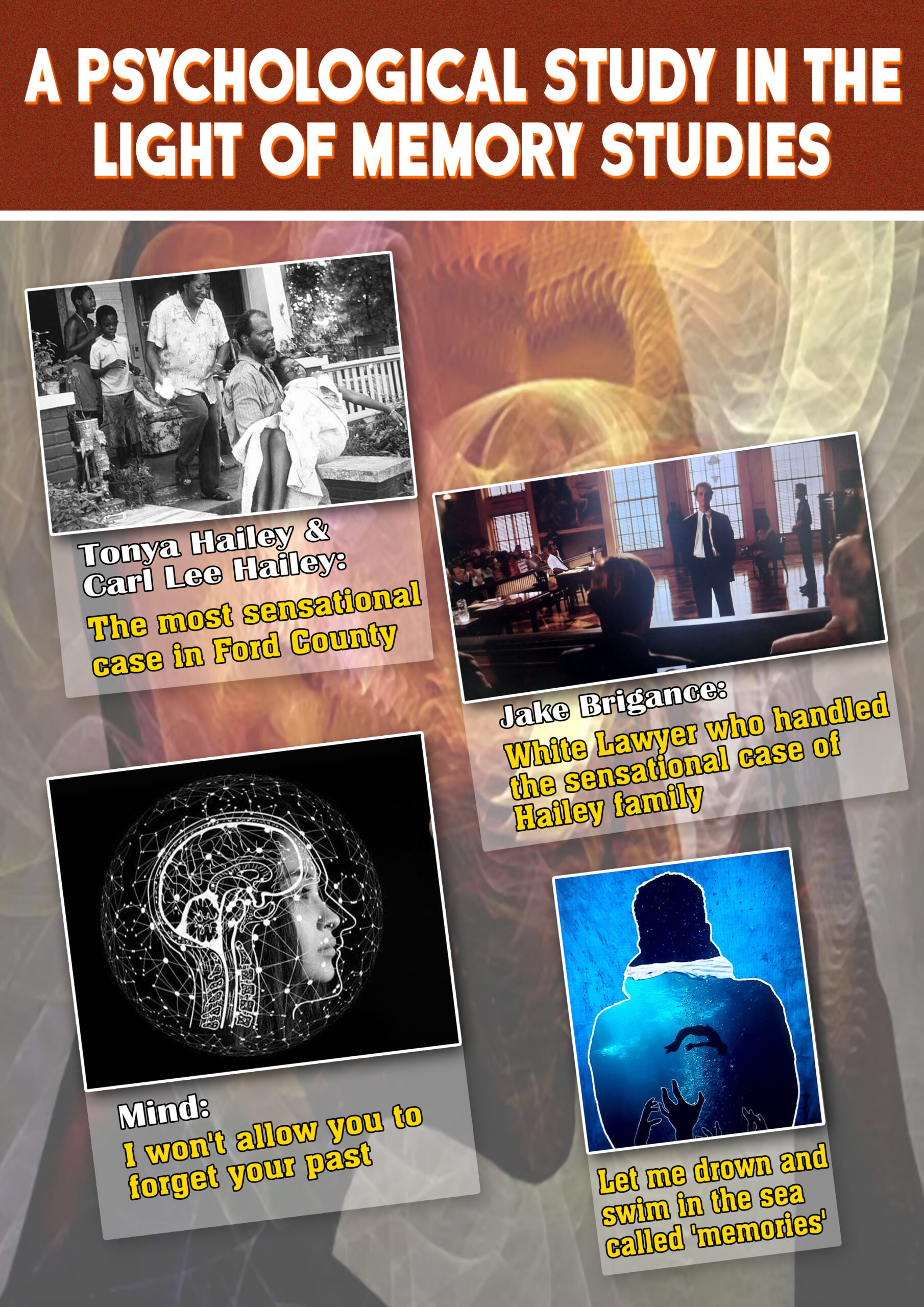
Memory studies is an academic field of studying the use of memory as a tool for remembering the past. Memory has a great role in everyone’s life because we cannot live without memories. Psychology is the combination of two Greek words ‘psyche’ (soul) and ‘Logos’ (word or talk). So, it means ‘talk about the soul’. …
A Psychological Study in Light of Memory Studies (Berdhisha) Read More »
This paper argues that the caste of memory is an unexplored phenomenon in memory studies. The paper outlines two possible epistemological categories to advance caste-based understanding of memory. The first category suggests that existing studies of memory can be grouped into Memory of Caste. The memory of caste as an epistemological category group is the work which explores the role of collective memory in consolidating the caste-based group identity. The second category is termed as Caste of Memory- this category lacks existing research- for which the paper contributes and argues that individual memory in the caste system’s context is not naïve or free of caste’s influence. In this endeavour, the work analyses lived experience of the Dalit individual as narrated in autobiography. The paper concludes that memory should not be considered caste neutral and should be accounted in the analysis of memory.
Food plays an important part in the processes of remembering and forgetting, thereby elevating a relatively quotidian task to an important archival process that concretizes identity formation. Food and associated culinary practices can trigger certain acts of remembrance that take up the texture and flavour of the food in question. The article explores the complex convergences of memory and culinary studies through an analysis of Michelle Zauner’s memoir Crying in H Mart (2021). The novel is entirely founded on the dialogue that goes on between the act of consumption of food and memory-making. The article studies how food manipulates the discourses on memory, belonging, nostalgia, and grief as represented in the novel. It will thus highlight Zauner’s work as a memory-narrative that engages in the visceral, metaphorical, and material affect contained within taste memories and the power that it holds in chronicling a life-narrative.
Cinema is an altogether different medium of artistic expression from literature. Its power of capturing the present has complicated the concept of memory and postmemory. The experience of a geo-political event like partition passes from one generation to another through memory. But what happens when the first-hand experience of partition is captured in a cinematic work? This essay will engage with this complex phenomenon of Indian history reflected in Nemai Ghosh’s Chinnamul (The Uprooted) and Ritwik Ghatak’s Meghe Dhaka Tara (The Cloud-Capped Star). In addition, I shall emphasise how Ghosh and Ghatak use the technique of telling and re-telling stories to recreate the partition memory in a more complex manner. However, in bringing these two works together, this article will discuss the idea of prosthetic memory and trauma related to the Bengal partition.
Technological aids now play a more significant role in mobilizing popular movements. Social media platforms like Twitter and Facebook have provided survivors with a virtual space to publicize their trauma-laden mental, physical, and sexual assault memories. These virtual spaces, therefore, provide a space for collective trauma, having the potential to ignite popular movements. The #MeToo movement, #YesAllWomen, and #BLM movement show that the traumatic chunks of memories possess the potential to uncover hidden patterns of suppression and sexual violence in public spaces ranging from films to MNCs to academia. Acknowledging the controversial nature of the consequent events of the #MeToo movement, in this paper, I intend to explore the role of social media in providing a space for memory mobilization in the #MeToo movement. Furthering the discussion in this direction, I also aim to conceptualize the role of Twitter in constructing an emancipatory debate for survivors of sexual assault.
This paper tries to understand the politics involved in memorialising COVID-19 in the digital world. The COVID-19 pandemic brought forth multiple challenges in front of the world and is expected to continue to do so. How we remember the pandemic is critical to our responses towards challenges that will be posed by it in the medium to long terms. An approach that recognises failures of state policies may yield completely different answers than one that considers COVID a natural disaster. The question is as much of remembering COVID-19 as it is of how it ought to be remembered. While the privately curated National COVID Memorial exists online, it falls short in drawing any relevant connections between the dead and fails to imbue their deaths with any common meaning other than their cause of death. The question of if a memorial is required at all is relevant to this paper, especially in the digital age when images, videos and writings are widely accessible. We can view with hindsight different responses of the Indian masses to the pandemic in each subsequent wave. As videos and images swirled over the digital domain, different kinds of responses to the pandemic were generated. This paper will try to answer if a unitary meaning ought to be given to COVID-19, especially to the backdrop of alternate discourses and experiences available digitally.
The present paper will attempt to understand the interfaces of history and memory, in Kashmir, by looking at the kind of challenges presented by memory, as a mode of engagement, response, and resistance to the statist reading of the Kashmir Question. The paper attempts to focus on the counter-memory practices as alternative means of expressions and protests, that the local population has lately devised through popular cultural productions like musicals and arts in circulation through latest media technologies. The paper in particular will look at the potential of cultural productions, not only as alternative means of protest and resistance but also as archives of resistance, building on the works of scholars like David Lowenthal and Patrick Hutton. The paper highlights the potential for simultaneous uses of memory-making as an artifice by both the oppressor groups and the oppressed groups to necessitate further research into identification and self-identification premised on memory-politics as conceptual categories towards determining the nature, scope and challenges of memory-making for different types and scales of nationalist projects.
Remembrance seems to be about the past. While the Holocaust is an event in the past, the Nakba did not end in 1948. The relationship between film and reality is historically and politically infused in the films of the Palestinian new wave to create a cultural weapon that also serves as resistance. These movies are works of oppressed people’s history. This paper intends to focus on the intersections of memory and trauma in Mahdi Fleifel’s A World Not Ours and Mai Masri’s Children of Shatila, by examining the themes of traumatic identity, global and prosthetic memory in the films. The study further explores the representation of memory and how it externalizes and historicizes traumatic emotions which would otherwise remain at the level of internal and individual psychology.
In a Q&A session with the Booker Prize, Avni Doshi talked about the centrality of art in the narrative as such; “On the level of story, art plays a central role in how the characters develop in Burnt Sugar. The major conflicts between characters are framed by the artistic production of the narrator. On a …
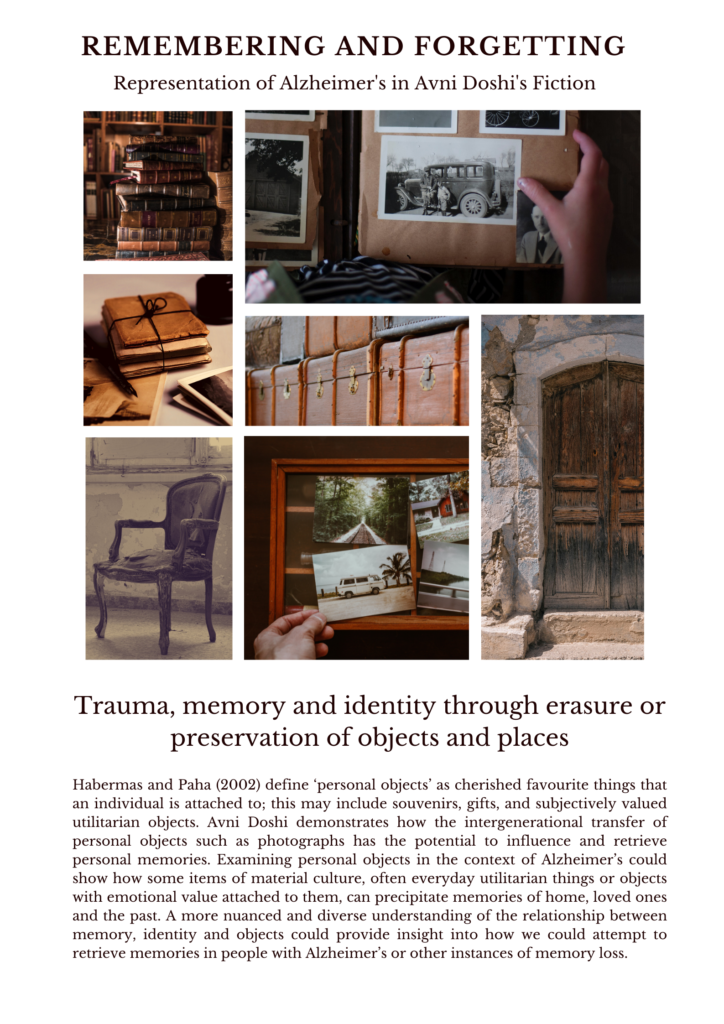
Episodic memory is a category of long-term memory that involves the recollection of specific events, situations, and experiences. Since every individual views and understands circumstances differently and because every person has different memories of those events, episodic memory is vital to your sense of self. In a person with Alzheimer’s, there is a decline in …
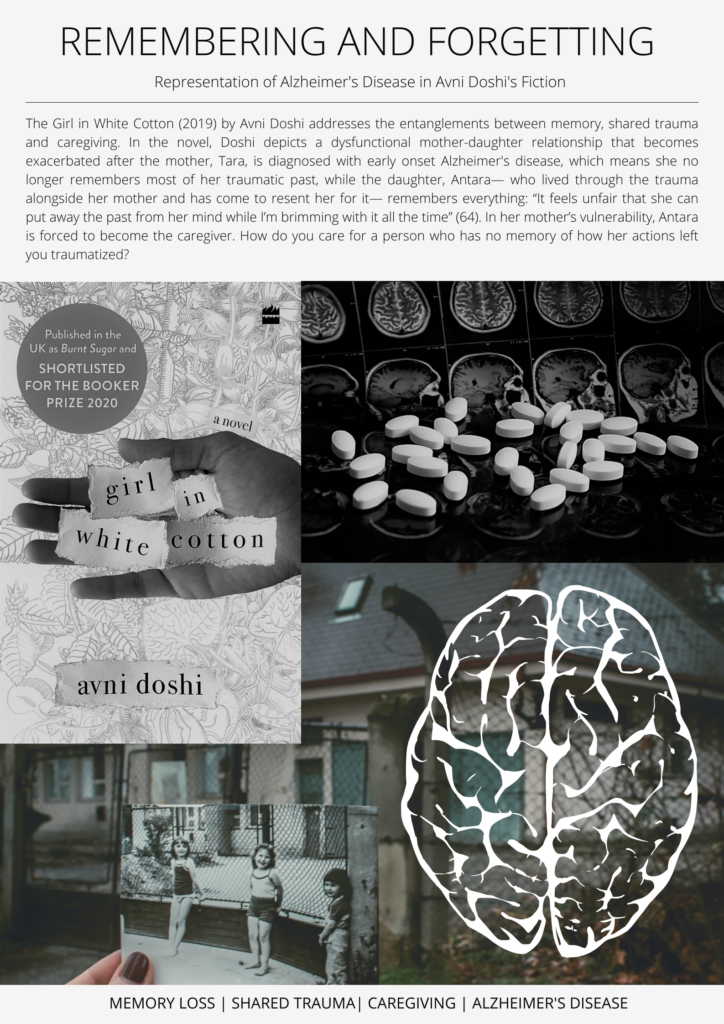
The Girl in White Cotton is a debut novel by Avni Doshi, published in 2019 that explores the entanglements between memory, shared trauma and caregiving. The plot follows the fraught relationship between a mother and daughter, Tara and Antara. The daughter must care for her mother, as the latter is suffering from memory loss caused by the early onset of Alzheimer’s disease.