
From Page to Protest: Literary Testimony and the Reconstruction of Public Memory (Elakshi Gupta
From Page to Protest: Literary Testimony and the Reconstruction of Public Memory
From Page to Protest: Literary Testimony and the Reconstruction of Public Memory
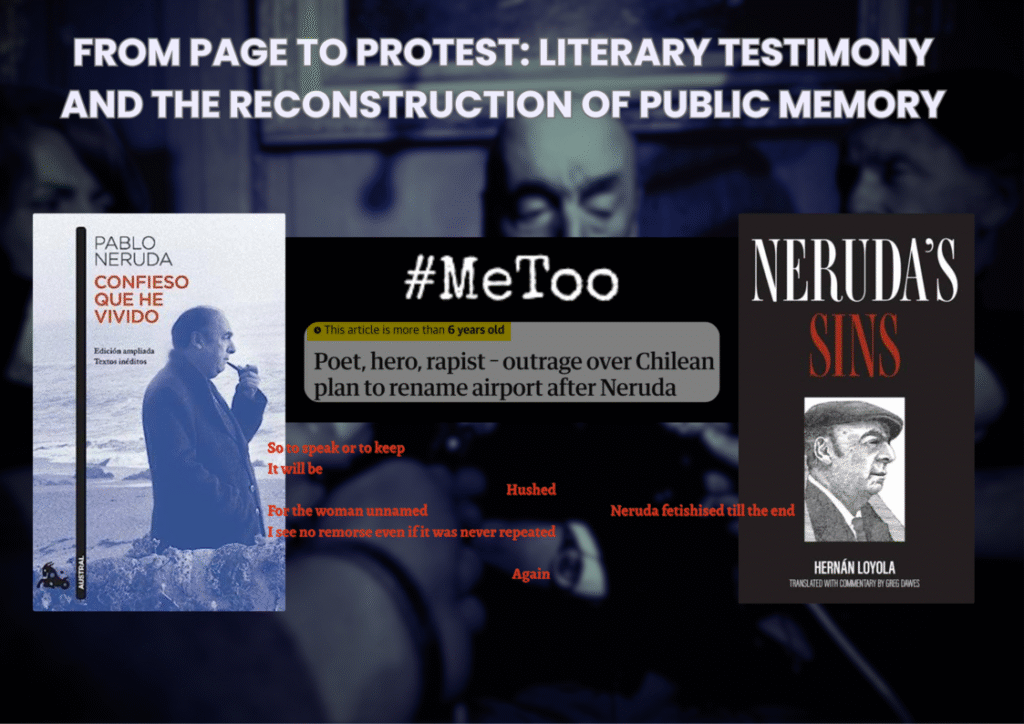
Hernán Loyola’s Neruda’s Sins attempts a sympathetic reckoning of the poet’s personal failings — his betrayals as a husband, his inadequacies as a father, casually inserting the word rapist into a list of moral lapses, as if all were sins of comparable weight. But what Neruda confessed to in Ceylon (present day Sri Lanka), where he served as a consul, was not a personal failing, but a violent crime. In ‘Confieso Que He Vivido’ his memoir’s fourth chapter ‘Luminous Solitude’, he describes, without any apparent remorse, the assault of a Tamil woman of the Paraiyar caste. A chilling account steeped in objectification, yet again stripping her of both voice and agency, as he indulges in a crude, lustful description.