
LIVED EXPERIENCES: A PEOPLES HISTORY | Dr Ritu Bhagat
LIVED EXPERIENCES: A PEOPLES HISTORYVisual Archives: Family Photographs as Memory Refugee Resilience and Rebuilding Lives in Post-Partition of India | Dr Ritu Bhagat
LIVED EXPERIENCES: A PEOPLES HISTORYVisual Archives: Family Photographs as Memory Refugee Resilience and Rebuilding Lives in Post-Partition of India | Dr Ritu Bhagat
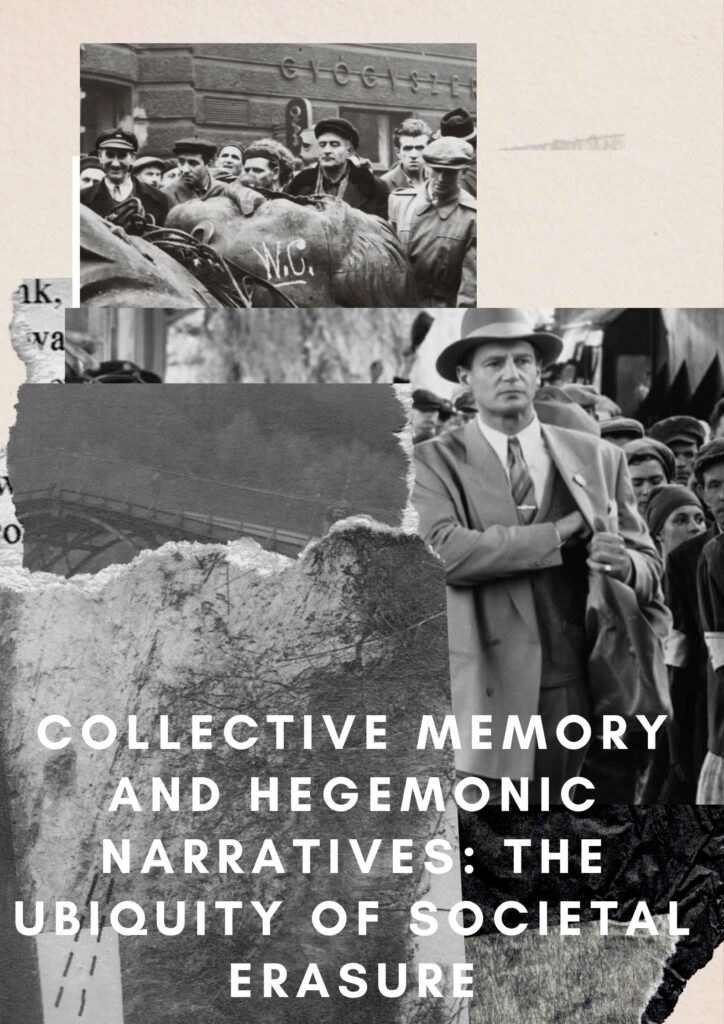
This poster brings into focus two things. The fallen statue of Lenin highlights the contemporary contestations of history. It aims to delegitimize certain ideals of the past that do not align with the present aspirations. Removing the statues of Lenin does not wipe out the history of authoritarianism in Russia. However, it condemns an uncritical …
Maes’ proposal on existential aesthetics, which appeared in the Journal of Aesthetics and Art Criticism in 2022, has the potential to be extended in myriad manners. Here, the attempt is to confer a material or tangible extension to his proposal. Material existential aesthetics provides scope for dialogues between artists, philosophers, historians and architects. Through their endeavours, viewers can expect to access a tangible platform for addressing existential concerns. Simultaneously, materialisation of existential aesthetics provides an avenue for researchers to examine how material forms, that include cemeteries and memorials, may help salvage people’s existential fears. As the gap between the material and existential aesthetics narrows further, the world may witness new forms of memorials that have the potential to be appreciated for both their utilitarian and artistic values.
The present paper will attempt to understand the interfaces of history and memory, in Kashmir, by looking at the kind of challenges presented by memory, as a mode of engagement, response, and resistance to the statist reading of the Kashmir Question. The paper attempts to focus on the counter-memory practices as alternative means of expressions and protests, that the local population has lately devised through popular cultural productions like musicals and arts in circulation through latest media technologies. The paper in particular will look at the potential of cultural productions, not only as alternative means of protest and resistance but also as archives of resistance, building on the works of scholars like David Lowenthal and Patrick Hutton. The paper highlights the potential for simultaneous uses of memory-making as an artifice by both the oppressor groups and the oppressed groups to necessitate further research into identification and self-identification premised on memory-politics as conceptual categories towards determining the nature, scope and challenges of memory-making for different types and scales of nationalist projects.
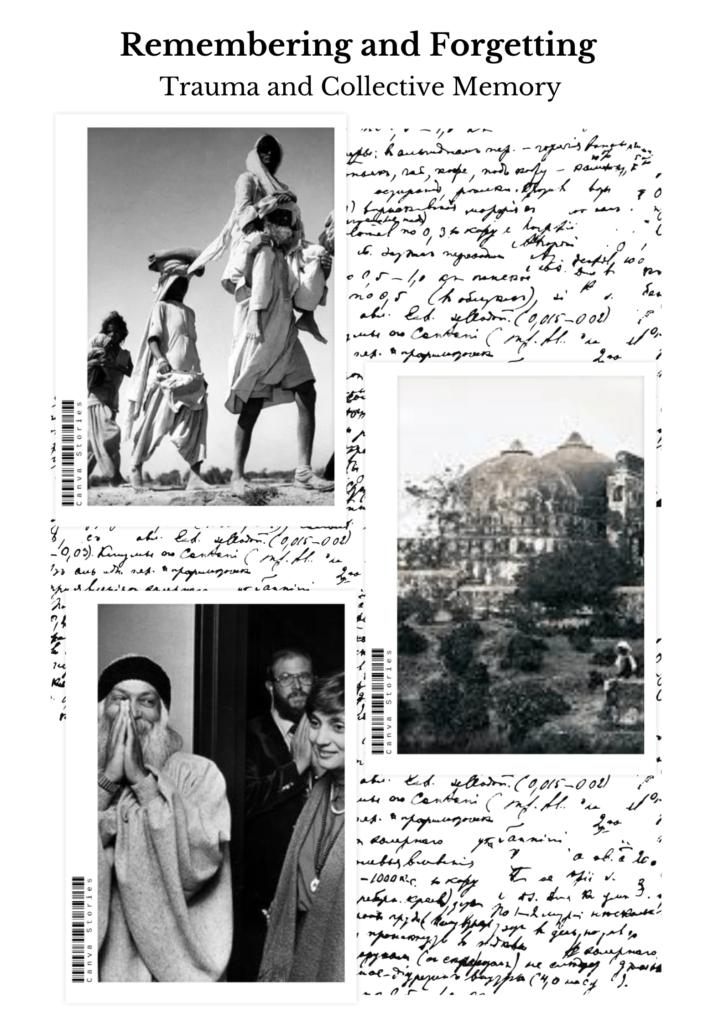
What are collective memories of the past and how are they remembered? A. Assmann has argued that collective memories must be defined in terms of the function they play in society. “Just as autobiographical memories are individually held memories that bear on the identity of an individual, collective memories are widely held memories of community …
Remembering and Forgetting: Collective Memory – Angel Maria Varghese Read More »